

 English
During a working session on Saturday between a delegation from the National Assembly and Da Nang authorities regarding the development of an international financial centre, a free trade zone, and the transition of special mechanisms and policies for the city, Secretary of the Da Nang Party Committee Nguyen Van Quang presented several key proposals to advance these strategic initiatives.
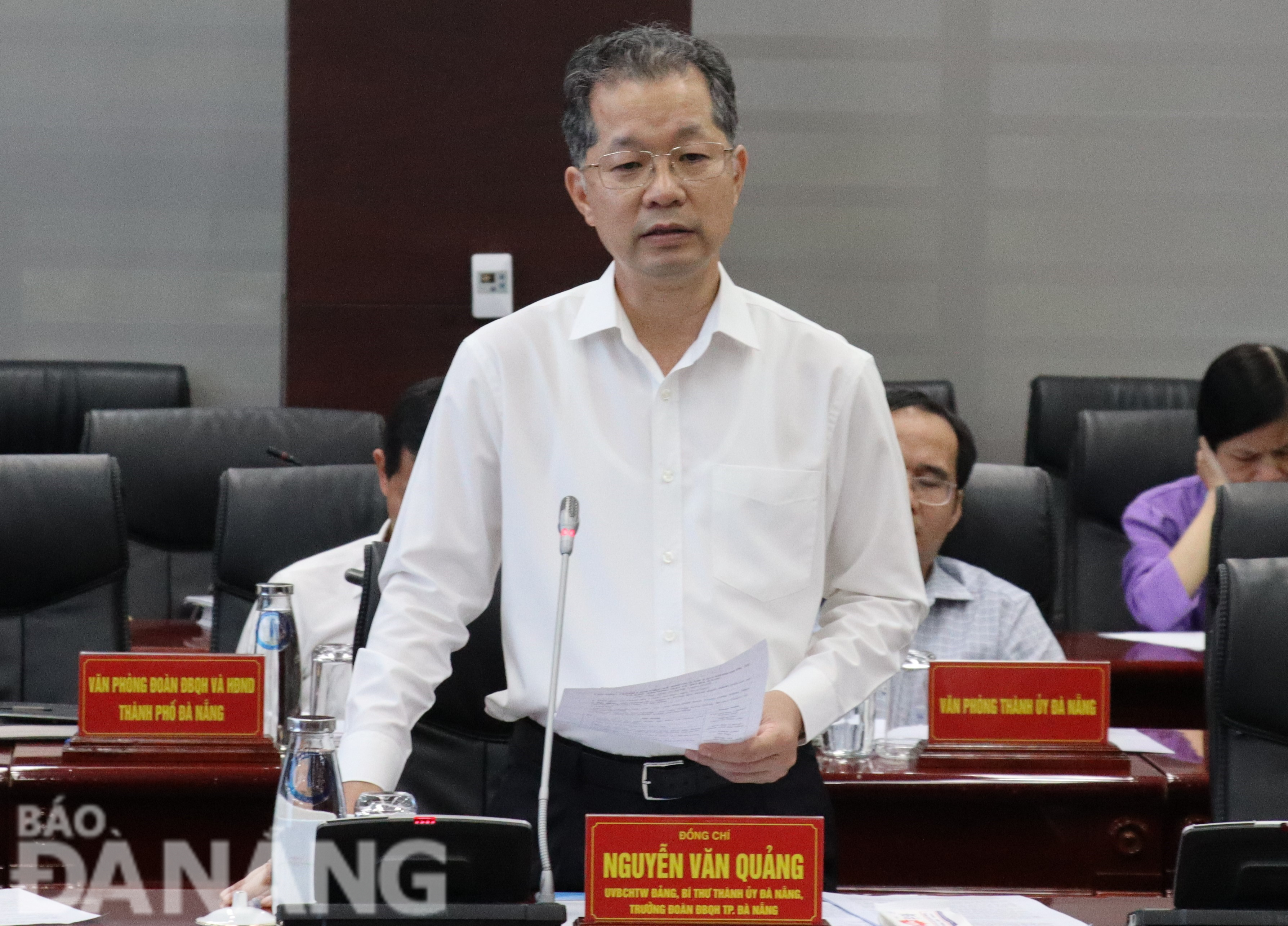
Da Nang Party Committee Secretary Nguyen Van Quang speaking at the working session. Photo: M. Que
Present at the meeting Vice Chairmen of the National Assembly Nguyen Duc Hai and Senior Lieutenant General Tran Quang Phuong, along with Mr. Phan Van Mai, Chairman of the National Assembly’s Economic and Financial Committee.
Representing Da Nang and Quang Nam Province were Secretary Nguyen Van Quang; Secretary of the Quang Nam Provincial Party Committee Luong Nguyen Minh Triet; Permanent Deputy Secretary of the Da Nang Party Committee Nguyen Dinh Vinh; Chairman of the Da Nang People’s Committee Le Trung Chinh; Chairman of the Da Nang People’s Council Ngo Xuan Thang; Vice Chairmen of the Da Nang People’s Committee Ho Ky Minh and Tran Chi Cuong, along with leaders of various departments and agencies.
Speaking at the meeting, Secretary Quang noted that, in accordance with the Politburo’s Notice No. 47-TB/TW dated November 15, 2024, which concluded on the development of regional and international financial centres in Viet Nam, both Da Nang and Ho Chi Minh City have actively coordinated with relevant ministries and agencies to lay the groundwork for establishing international financial centres.
As of now, Da Nang has prepared essential resources, particularly infrastructure and human capital, to support the development of the centre. The city now faces the critical question of how to structure the centre to attract investors and remain competitive with existing global financial hubs.
Da Nang will continue to work closely with the Ministry of Finance to gather input from financial institutions, investment funds, advisory firms, law firms, and both domestic and international experts to refine the draft resolution for submission to the National Assembly.
Also, the city will incorporate feedback from the Politburo, the National Assembly Standing Committee, relevant National Assembly committees, central ministries, and the Prime Minister’s Advisory Council to finalise the resolution. The Ministry of Finance will then submit the proposal to the Government and the Party Committee of the Government for review before presenting it to the Politburo and subsequently to the National Assembly during its 9th session of the 15th tenure.
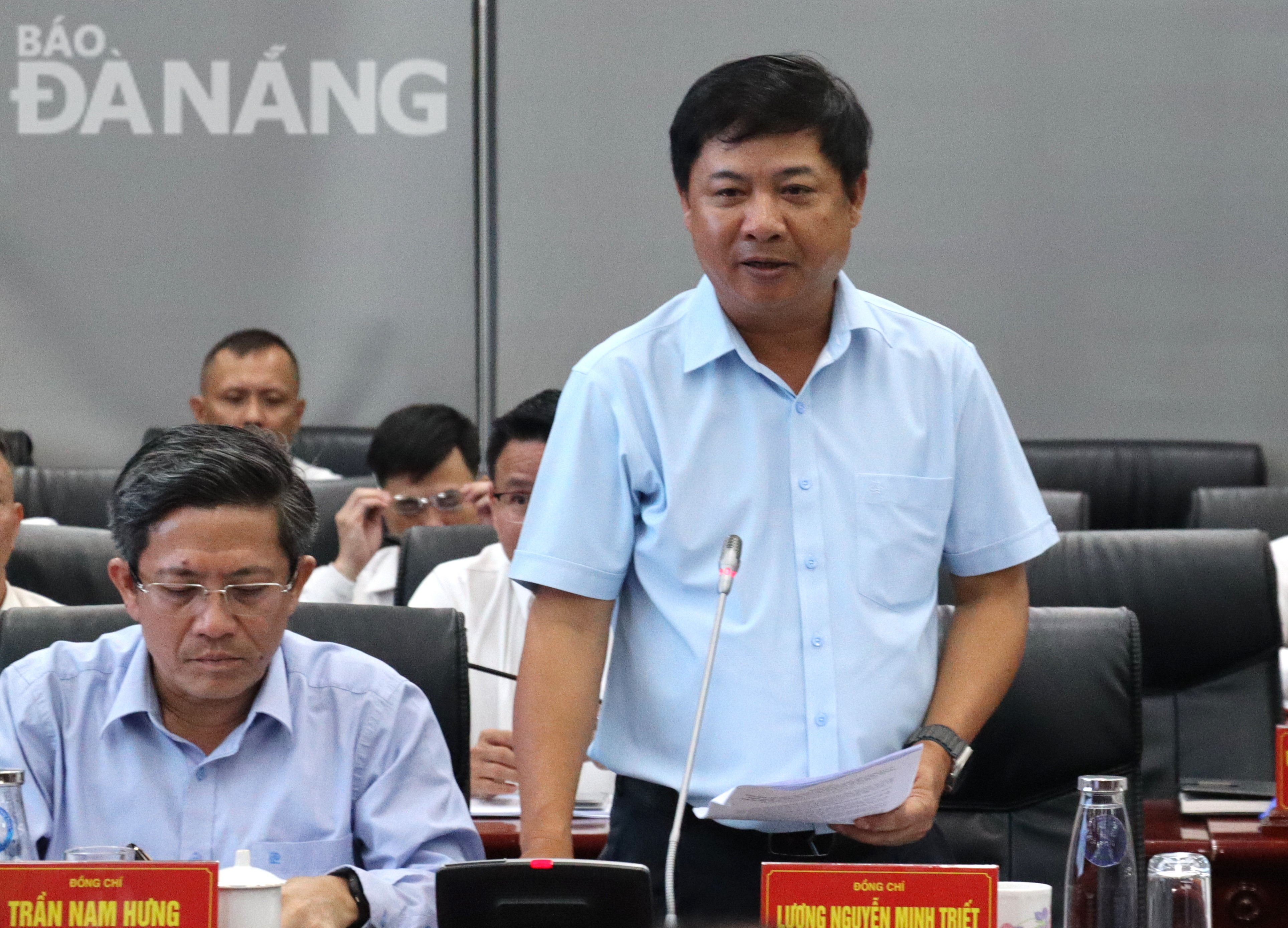
Secretary of the Quang Nam Provincial Party Committee Luong Nguyen Minh Triet speaking at the event. Photo: MAI QUE
Regarding the proposed free trade zone, an unprecedented model not yet codified in the current legal framework, preferential policies approved under Resolution No. 136/2024/QH15 (dated June 26, 2024) are still largely based on existing policies for general economic zones. As such, they fall short of offering a truly competitive and attractive advantage in the region.
The city proposed that when the National Assembly adopted the resolution to transition special mechanisms from pre-merger to post-merger localities, it includes more favorable conditions for Da Nang’s free trade zone. This should be clearly stipulated in the overarching resolution to ensure legal clarity.
Da Nang also called on the National Assembly to endorse the continuation of its current special mechanisms and policies under Resolutions No. 136/2024/QH15 and No. 170/2024/QH15 (dated November 30, 2024) after the upcoming administrative merger. These policies aim to resolve longstanding issues related to investment projects, land disputes, and enforcement of inspection and court rulings in Ho Chi Minh City, Da Nang, and Khanh Hoa Province.
Quang Nam Provincial Party Committee Secretary Luong Nguyen Minh Triet emphasized the need to update and adapt these policies to new realities. He also suggested that once the free trade zone is established, it could be expanded southward into areas of Quang Nam that offer strategic advantages, such as the Tam Hoa seaport and Chu Lai Airport.
Mr. Triet further noted that the implementation of Resolution No. 170/2024/QH15 in Da Nang has yielded positive results. Quang Nam, therefore, hopeed to benefit from the same mechanisms following the administrative merger with Da Nang.
Concluding the session, National Assembly Vice Chairman Nguyen Duc Hai emphasized the urgency for Da Nang to collaborate with the Government in finalizing and submitting the draft resolution on the international financial centre, as time is of the essence.
He acknowledged the complexity and novelty of establishing a financial centre in Da Nang, highlighting the need for broad consensus within the National Assembly and a well-formulated policy framework.
Key issues to be addressed included investment incentives, the creation of specialized financial exchanges, foreign exchange operations, and updates to urban planning, all of which must be submitted to the National Assembly’s Economic and Financial Committee for further review, he noted.
Mr. Hai also stressed the interconnection between the free trade zone and the financial centre, noting the importance of attracting strategic partners, major financial corporations, and domestic and international institutions to operate within these frameworks.
The National Assembly assigned its Economic and Financial Committee to continue coordinating with Da Nang to ensure legal consistency in the establishment of both the financial centre and the free trade zone.
Da Nang was urged to expedite procedures and fulfill necessary requirements to ensure the effective implementation of the forthcoming free trade zone.
Regarding the transition of special mechanisms from pre- to post-merger localities, the National Assembly Standing Committee will continue its deliberations and issue guidance to local authorities once a conclusion is reached.
DA NANG Today
TỔNG ĐÀI DỊCH VỤ CÔNG: (0236) 1022 hoặc *1022, miễn phí phục vụ
1. Đường dây nóng tiếp nhận ý kiến phản ánh, góp ý của tổ chức, công dân.
2. Hướng dẫn, giải đáp quy định, chính sách, thông tin kinh tế – xã hội.
3. Hướng dẫn thực hiện thủ tục hành chính, dịch vụ công trực tuyến.
4. Cung cấp thông tin về hỗ trợ doanh nghiệp; quy định, chính sách hỗ trợ Khoa học công nghệ, đổi mới sáng tạo và chuyển đổi số.
5. Cung cấp thông tin về du lịch, sự kiện Văn hóa – Thể thao.
6. Cung cấp dịch vụ Tổng đài CSKH, nhắn tin CSKH, truyền thông, sự kiện và các dịch vụ tư vấn khác…