


 English
With the Resolution No. 136/2024/QH15 on the organisation of urban administration and the piloting of a number of special mechanisms and policies for the development of Da Nang, the central coastal city is allowed by the National Assembly to pilot a financial mechanism to implement measures to reduce greenhouse gas emissions according to carbon credit exchange and offset mechanisms.
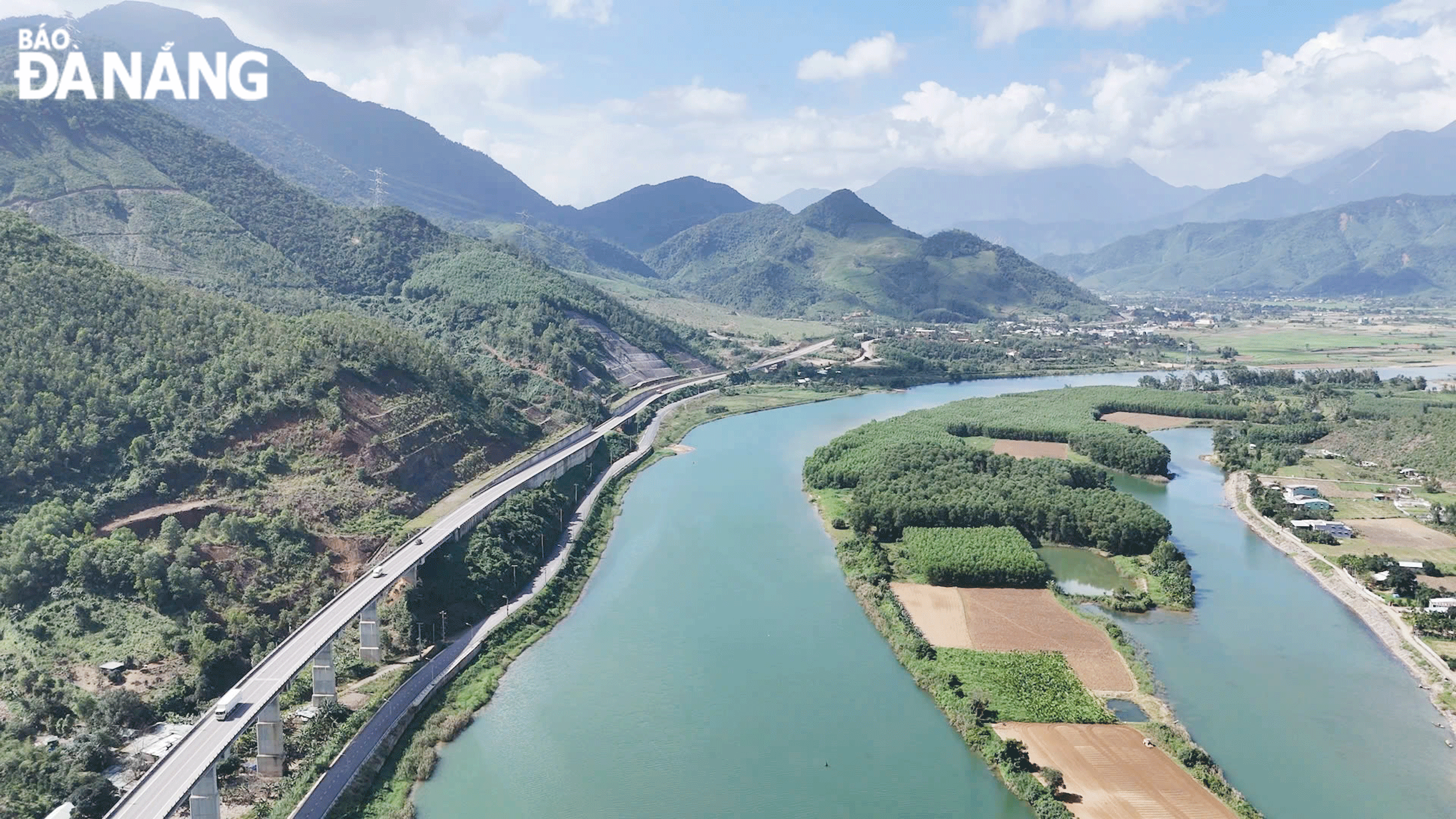
The city will maintain forest cover and implement solutions to improve environmental quality according to the project “Building Da Nang into Environmentally Friendly City” in the 2021-2030 period, aimed to reduce low carbon emissions and build ecological urban areas. Photo: HOANG HIEP
Accordingly, the city enjoys 100% of the budget revenue from carbon credit trading and uses it for programmes and projects on adapting to climate change; developing the green economy, digital economy and circular economy; and ensuring the city’s sustainable development.
Viet Nam is one of the countries with very small carbon or greenhouse gas emissions (the main factor causing global warming), but is one of the countries most heavily affected by climate change, especially the increase in the intensity of natural disasters such as storms, heavy rains, floods, cold spells, heat waves, droughts, etc. The formation of the carbon credit market will help Viet Nam achieve its net zero emissions goal by 2050.
Since 2008, Da Nang has implemented a project on turning itself into an environmentally friendly city. It has so far established a balance between economy, society and environment by combining environmental protection with socio-economic development in a harmonious way.
The city has also received many environmental awards at home and abroad. In particular, it was named among top 20 low-carbon cities in the world at the Asia-Pacific Economic Cooperation (APEC) meeting on energy held in Washington DC, the U.S. in 2012.
Currently, Japan’s Yokohama City is supporting Da Nang in implementing the transition to low carbon; promoting the transfer of energy-saving and renewable energy technologies; and developing green and ecological industrial parks.
Deputy Director of the municipal Department of Natural Resources and Environment Vo Nguyen Chuong said that, according to the forecast scenario, the net emissions from the main emission sources of Da Nang will be at 6.3 million tons of CO2 (equivalent) in 2025 and at 9.4 million tons of CO2 (equivalent) in 2030.
The city plans to generate carbon credits from a number of programmes and projects using its state budget, especially in the energy sector with two basic groups of solutions about increasing the penetration rate of high-efficiency energy-using equipment in the industrial, service, trade and transportation sectors; and restructuring the transport market, including addressing emissions from normal fuel consumption, and shifting energy use for public and personal transport from fuel to electricity…
Da Nang chooses to approach the carbon credit market as a “seller” because currently, large enterprises, corporations as well as a number of countries and territories have high demand for purchasing carbon credits.
The municipal Department of Natural Resources and Environment will closely follow the specific mechanism according to Resolution No. 136/2024/QH15 of the National Assembly to advise the local leaders to form a carbon market in Da Nang and possibly a place to trade carbon credits in the region as well as have a longer-term vision in the near future.
After determining the contribution rate of greenhouse gas emissions and absorption to the common national goal, carbon credits formed from programmes and projects using the city budget will be traded with domestic and foreign investors.
With the amount of carbon credits that will be formed in the future and through environmental control activities, and investment in construction and non-construction solutions, the carbon market in Da Nang is hoped to be relatively effective.
DA NANG Today
TỔNG ĐÀI DỊCH VỤ CÔNG: (0236) 1022 hoặc *1022, miễn phí phục vụ
1. Đường dây nóng tiếp nhận ý kiến phản ánh, góp ý của tổ chức, công dân.
2. Hướng dẫn, giải đáp quy định, chính sách, thông tin kinh tế – xã hội.
3. Hướng dẫn thực hiện thủ tục hành chính, dịch vụ công trực tuyến.
4. Cung cấp thông tin về hỗ trợ doanh nghiệp; quy định, chính sách hỗ trợ Khoa học công nghệ, đổi mới sáng tạo và chuyển đổi số.
5. Cung cấp thông tin về du lịch, sự kiện Văn hóa – Thể thao.
6. Cung cấp dịch vụ Tổng đài CSKH, nhắn tin CSKH, truyền thông, sự kiện và các dịch vụ tư vấn khác…